
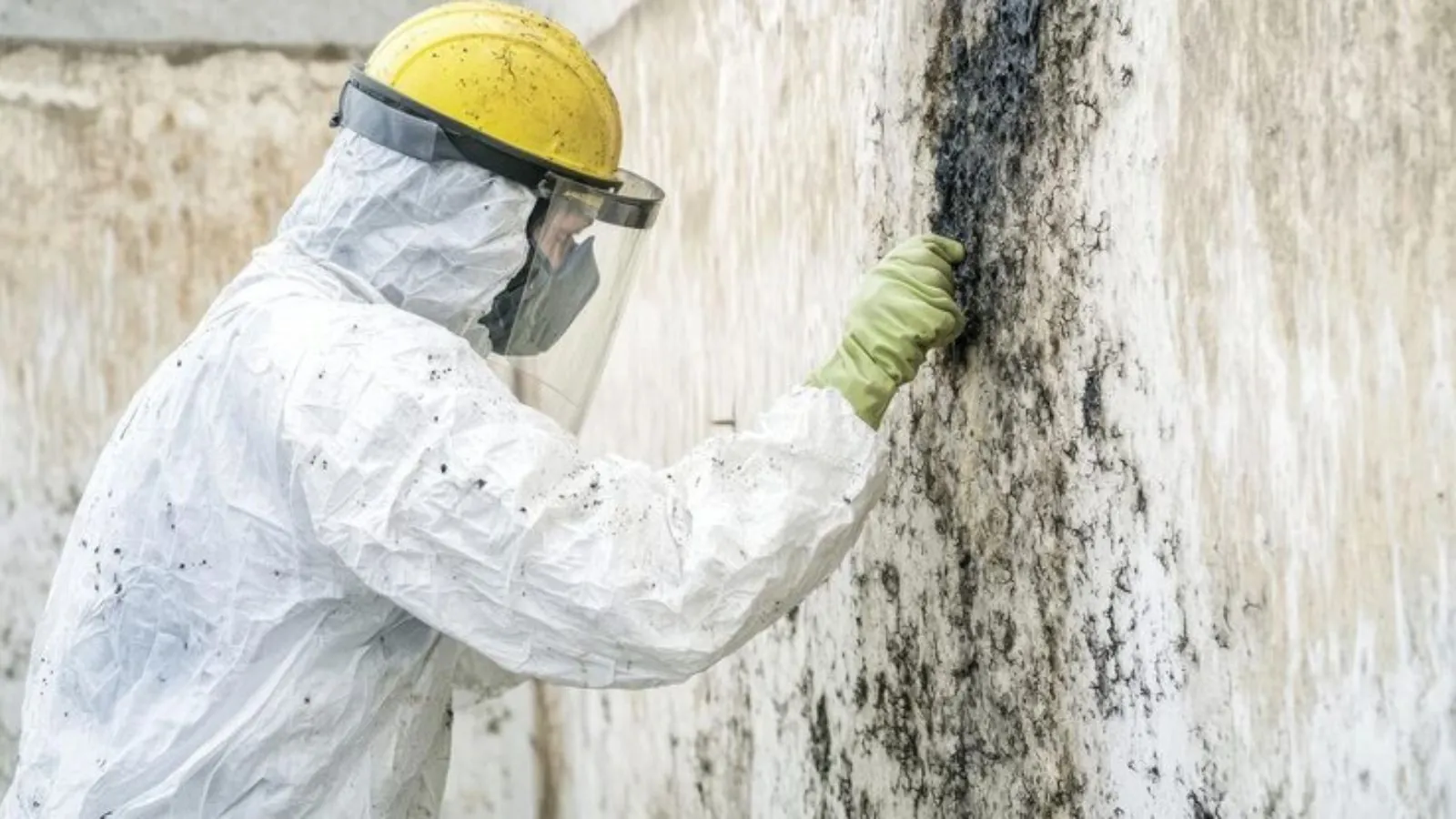
Mold needs moisture, and most mold in a home starts with a leak. A closet that smells musty, a bathroom wall with black spots or a basement corner with fuzzy growth all point back to water. Dispatch is open 24/7 for active leaks, and the leak has to be fixed first.
Mold remediation in Euclid, OH is the containment and removal of mold growth, the cleaning of affected surfaces and the correction of the moisture that fed it. Remediation follows the ANSI/IICRC S520 standard for mold. Questions about health belong with a physician.
Symptom-first: spots, smell and stains
People search for what they see: black spots on a bathroom ceiling, a musty closet, dark corners behind furniture, staining on carpet or fuzzy spots on a wall. All of these mean moisture is present. Mold is the result, and the water is the cause.
Fix the water first
Remediation without a dry structure does not last. A toilet seal, a tub drain, an AC condensate line, a roof or a window flashing can feed mold for months. We check readings, point to the likely source and recommend the right trade to fix it.
Common sources are covered on AC leak water damage, ceiling water damage repair and kitchen water damage restoration.
Inspection and testing questions
Callers often ask whether they need testing. Visible mold does not need a lab to confirm it, since the fix is the same. Testing can help when growth is hidden, when a buyer or lender asks for documentation or when you want independent clearance after the work.
Independent clearance testing is best done by a third party who has no stake in the cleanup. We do not promise that a lender will accept any result. Ask your lender what documentation it requires.
Mold or a damp smell? Call and we will explain inspection, containment and next steps.
Call (216) 541-8541How remediation is done
- Fix the moisture source and dry the area.
- Contain the work area with plastic sheeting and negative air.
- Remove affected porous materials such as drywall and carpet.
- Clean and treat surfaces that can be saved.
- Use HEPA filtration to capture airborne spores.
- Dry again and check readings before closing walls.
Crews wear protective gear. The standard calls for containment and filtered air so that spores are not spread to clean rooms.
What can and cannot be cleaned
| Material | Typical outcome |
|---|---|
| Drywall with mold | Removed and replaced |
| Carpet and pad with growth | Removed |
| Framing wood with light surface growth | Cleaned and dried |
| Hard surfaces such as tile or glass | Cleaned |
| Insulation | Removed |
These are common outcomes. A crew decides on site with readings and inspection.
Where growth shows up
Bathrooms hold moisture from showers and leaks. Closets with cold exterior walls, basements with poor air movement and spaces under sinks are other typical spots. In each case the question is the same: where is the water coming from, and how long has it been there?
Black spots on a bathroom ceiling can come from poor ventilation, a leak above, or both. A crew can tell which by taking readings in the ceiling and checking the fan.
Safety checklist around visible mold
- Avoid disturbing the growth by scrubbing or sanding.
- Keep children and anyone with breathing concerns out of the area.
- Turn off the fan or HVAC that blows across the spot.
- Wear gloves and a fitted mask for anything you must handle, and ask a physician about health questions.
Cost, selling a home and what we do not promise
Cost depends on the area, the materials, the containment and the drying. Scope and price are explained before work starts. We do not promise that mold will never return, because that depends on whether moisture returns. Ask whether your state licenses mold work, and check that anyone you hire meets the rules.
If a home sale is involved, ask your agent and lender what documents they need, and keep photos before and after.
Questions we hear in Euclid
Mold itself is rarely an emergency, but an active leak feeding it is. Dispatch is open 24/7 for that. Mold jobs are usually scheduled.
Not always. Visible mold can be treated without a test. Testing helps with hidden growth or when a buyer, lender or landlord asks for it.
It will if moisture returns. We cannot promise it will not return, only that we remove the growth and point to the moisture source.
Often only when the mold follows a covered water loss. Ask your insurer before work begins.
A small area of surface mold on a hard surface can often be cleaned with detergent and water while wearing gloves and a mask. Anything larger, anything in drywall or anything that keeps returning needs an assessment.