
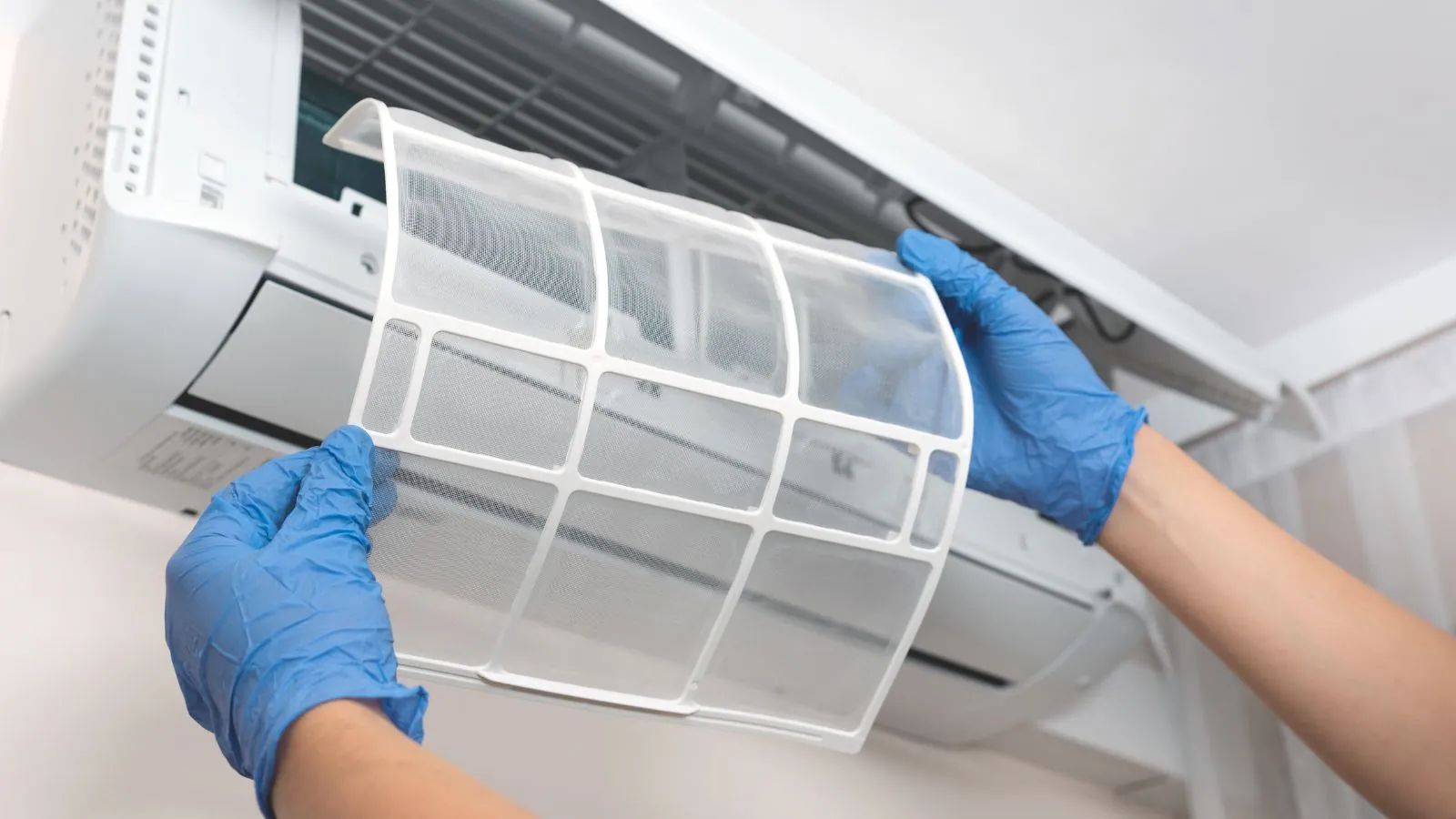
An air conditioner makes water every hour it runs, and that water has to drain. When the line clogs, the pan overflows and water goes where it should not. Our dispatch line is open 24/7 for the cases that cannot wait, such as a ceiling that is dripping.
AC leak water damage repair in Euclid, OH is the drying and repair of ceilings, closets, walls and floors wet by condensation from an air handler or a split system. The HVAC technician fixes the drain. The restoration crew dries the wet materials.
How an AC leak starts
Cooling pulls moisture out of the air, and that condensate drips into a pan and out a drain line. Algae and debris can clog the line. A cracked pan or a loose connection also leaks. Wall units and ductless heads can drip behind walls if the line is pitched wrong.
Common signs are a stain below an attic unit, a wet closet floor in a utility closet, a water-stained cabinet near a furnace and a musty smell when the system runs.
Short-term steps
- Turn the system off at the thermostat so it stops making condensate.
- Switch off the breaker if water is near the air handler.
- Place a bucket or towels under the drip and move stored items.
- Open the access panel only if it is safe and dry.
- Call an HVAC technician for the drain, and call us for the wet materials.
Why AC leaks hide
Many air handlers sit in attics or closets where nobody looks. A line can drip for days before a ceiling stains. By then insulation and drywall may be soaked and mold may have a foothold.
When the leak is above a ceiling, the damage resembles other overhead sources, and ceiling water damage repair covers the same repair steps. If a nearby wall is damp, wall and drywall water damage repair applies.
AC leak soaking a ceiling or closet? Turn the system off and call us.
Call (216) 541-8541Drying and repair
A moisture meter and a thermal camera show how far the water spread. Wet insulation is removed. Drywall that is saturated is cut out and replaced. Air movers and a dehumidifier dry the area.
Because condensate drips over a long time, mold may be present. We check for it before closing walls. If it is found, mold work follows containment steps, covered on the mold remediation page.
Leak type and likely outcome
| Source | What it wets | Typical fix |
|---|---|---|
| Clogged drain line | Ceiling or closet floor | Clear the line, dry the area |
| Overflowing drip pan | Attic floor, ceiling below | Replace pan, dry insulation |
| Cracked pan or fitting | Wall or cabinet | Repair the part, open and dry the wall |
| Frozen coil melting | Floor and wall around the unit | Service the system, extract and dry |
Habits that keep the drain clear
Ask an HVAC technician to clear the condensate line each spring. Pour a cup of vinegar through the access port as advised by the technician, and check that the pan is dry. Replace the filter on schedule, because a dirty filter can ice the coil and cause a flood when it melts. A float switch that shuts the system off when the pan fills is a cheap safeguard.
Standards we follow
Condensate leaks usually involve clean water, which ANSI/IICRC S500 treats as the least contaminated category, but a drain line that sat stagnant for weeks can be graded higher. We say which category we found.
Cost and coverage
The size of the wet area, the insulation involved and the drying days set the price. Scope and price are explained before work starts. Insurers vary on HVAC drain failures, so ask yours whether sudden discharge is covered.
A yearly HVAC checkup that clears the drain line is cheap compared with a ceiling repair.
Questions we hear in Euclid
If water is actively dripping into a ceiling or near electrical equipment, treat it as urgent. A slow drip with a dry floor can wait for a scheduled visit. The dispatch line is open 24/7 either way.
An HVAC technician fixes the line and the pan. We dry and repair the wet materials. Many homeowners call both.
Damp materials left wet for days can grow mold. Quick drying reduces the risk, and a musty smell is a reason to check.
Policies differ on HVAC leaks. Sudden discharge is often treated differently from long-term seepage. Ask your insurer.
Signs include water near the air handler, a full drip pan, a ceiling stain below the unit and a system that shuts off on its own. A technician can clear the line.