
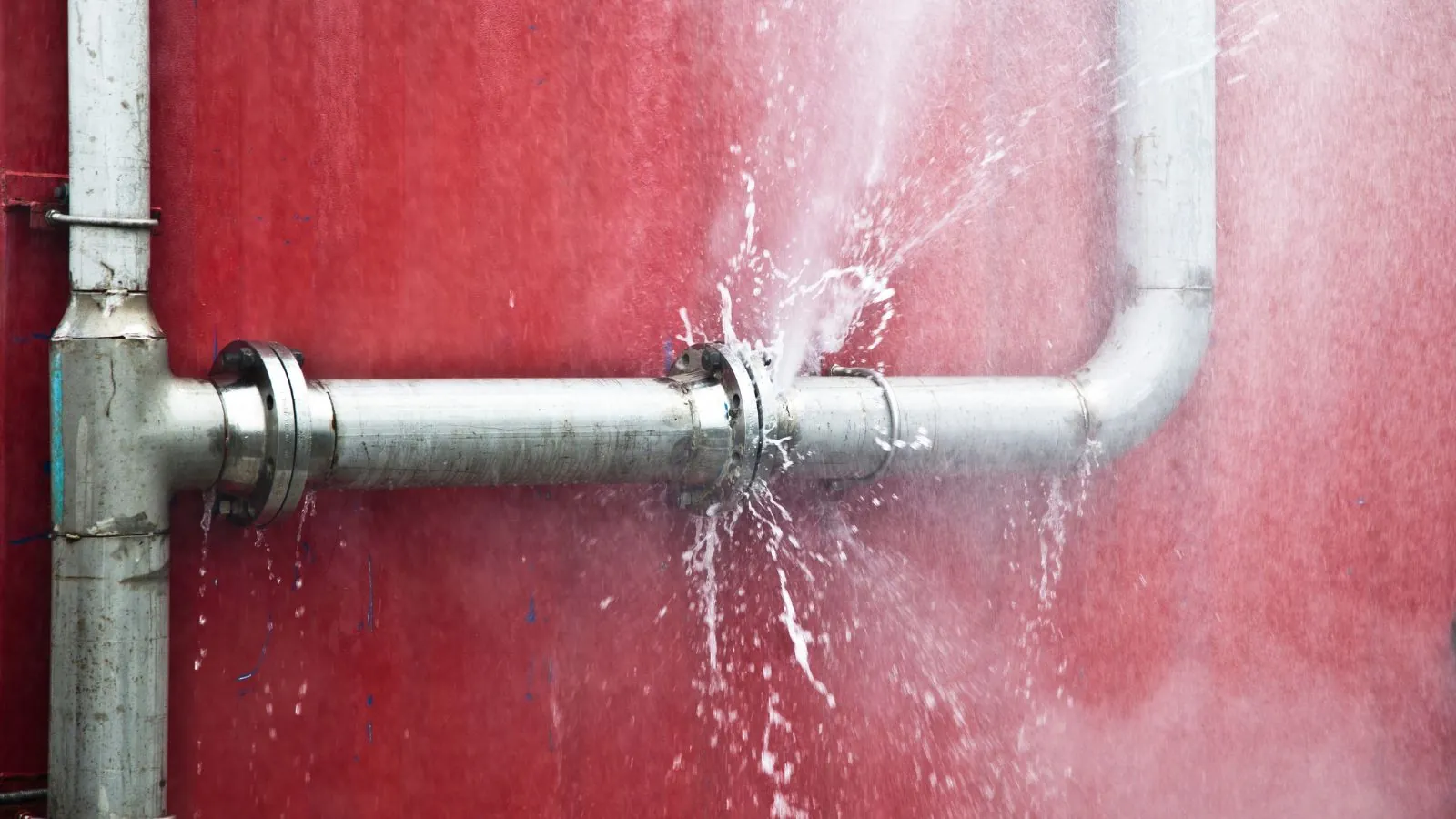
A burst pipe is an emergency because the water is under pressure and does not stop on its own. Dispatch is open 24/7. Find the main shutoff and close it before you do anything else, then call us while you open a faucet at the lowest point to drain what is left in the line.
Burst pipe water damage in Euclid, OH is the wet drywall, soaked insulation, lifted flooring and hidden moisture left behind after a pressurized supply line fails. Plumbers fix the pipe. Restoration crews remove the water and dry the structure so the repair is not built over a wet wall.
What to do in the first minutes
Pressurized supply water can move through a wall cavity and into the floor below within minutes. The first goal is to stop the flow, and the second is to keep the water from reaching electrical devices.
- Close the main water valve, usually where the line enters the house near the meter or in the basement.
- Open the lowest faucet to relieve pressure and drain the line.
- Turn off power to the affected area at the panel only if the panel is dry and you can reach it without stepping in water.
- Move rugs, electronics and cardboard boxes away from the wet zone.
- Call the 24/7 line and describe where the pipe is, so the crew brings the right tools.
Know where the main valve is before the next cold night. It is usually where the line enters the house near the meter, and it should turn easily by hand.
Why pipes fail in Northeast Ohio homes
Euclid is in the Lake Erie Snowbelt, where lake-effect snow squalls and cold snaps are part of winter. Water that freezes inside a line expands and can split a pipe or a joint, often in an exterior wall, a crawl space or an unheated garage. The split may not leak until the ice thaws, which is why the flood often arrives on a warmer afternoon.
Cold is not the only cause. Old fittings, a failed supply line under a sink and corrosion at a joint can burst a pipe in any season. If the source was ice, see frozen pipe water damage for the thaw and shutoff steps that differ.
Where the water goes
Water from a burst pipe follows gravity and the path of least resistance. It runs down inside the wall, soaks the insulation, wicks up the drywall and drips onto the floor or the ceiling below. By the time a stain shows, the damp area is usually larger than the stain.
- Upstairs bathroom or laundry lines drop water into the ceiling below. See ceiling water damage repair.
- Kitchen lines wet cabinets and subfloor. See kitchen water damage restoration.
- Wall breaks soak drywall and baseboards. See wall and drywall water damage repair.
- Basement lines flood the lowest level quickly and may reach the furnace or panel.
Pipe still leaking or the room soaked? Close the main valve, then call the dispatch line.
Call (216) 541-8541How a crew handles a burst pipe loss
The crew confirms the water is off, then maps moisture with a meter and a thermal camera. Standing water is pumped or extracted. Wet insulation and the lower portion of saturated drywall are often cut out so the cavity can dry, usually along a straight line a foot or two above the wet mark.
Air movers and LGR dehumidifiers are set to pull moisture from studs, subfloor and the remaining drywall. Readings are taken each day until the materials are back in range. The process, equipment and timing are covered in structural drying and dehumidification.
Restore, or replace?
| Material | Often dried in place | Often replaced |
|---|---|---|
| Drywall | Light wicking above the water line | Sagging, crumbling or soaked through |
| Insulation | Rarely | Almost always when wet |
| Hardwood | Early, before cupping spreads | Deep cupping or finish failure |
| Carpet and pad | Carpet from a clean source | Pad that stayed wet, or any contaminated water |
A moisture reading, not a guess, makes the call.
Standards we follow
We follow ANSI/IICRC S500 when we grade a burst pipe loss. A clean supply line is category 1 at first, though it can move to a higher category if it sits on dirty surfaces or stays wet for days.
Cost factors and your claim
Burst pipe jobs vary with the number of rooms affected, the time the water ran, how many materials have to be removed and how many days of drying equipment the structure needs. Scope and price are explained before work starts.
Insurers often cover sudden pipe bursts and often do not cover slow leaks or neglect, but policies differ, so check yours or ask your insurer. Photograph the pipe, the wet area and the shutoff before anything moves, and keep any damaged parts the plumber removes.
Questions we hear in Euclid
Yes. Dispatch answers 24/7, and a crew is sent the same day when one is available. Close the main valve and call. Burst pipes tend to fail on holidays and cold nights, and the line is staffed for exactly that.
Do both, but stop the water first. A plumber repairs the pipe. A restoration crew removes the water and dries the structure. Many people call the restoration line while the plumber is on the way.
Most structures need several days of equipment, and larger or longer losses need more. The only reliable answer is daily moisture readings until the framing and drywall return to a normal range.
Sudden and accidental discharge is often covered, while gradual leaks and neglect often are not. Read your policy or ask your insurer, and do not assume either way before you call.
Watch the water meter with every fixture off. If it moves, a leak exists. A plumber locates it, and a moisture meter shows how far the water spread.