
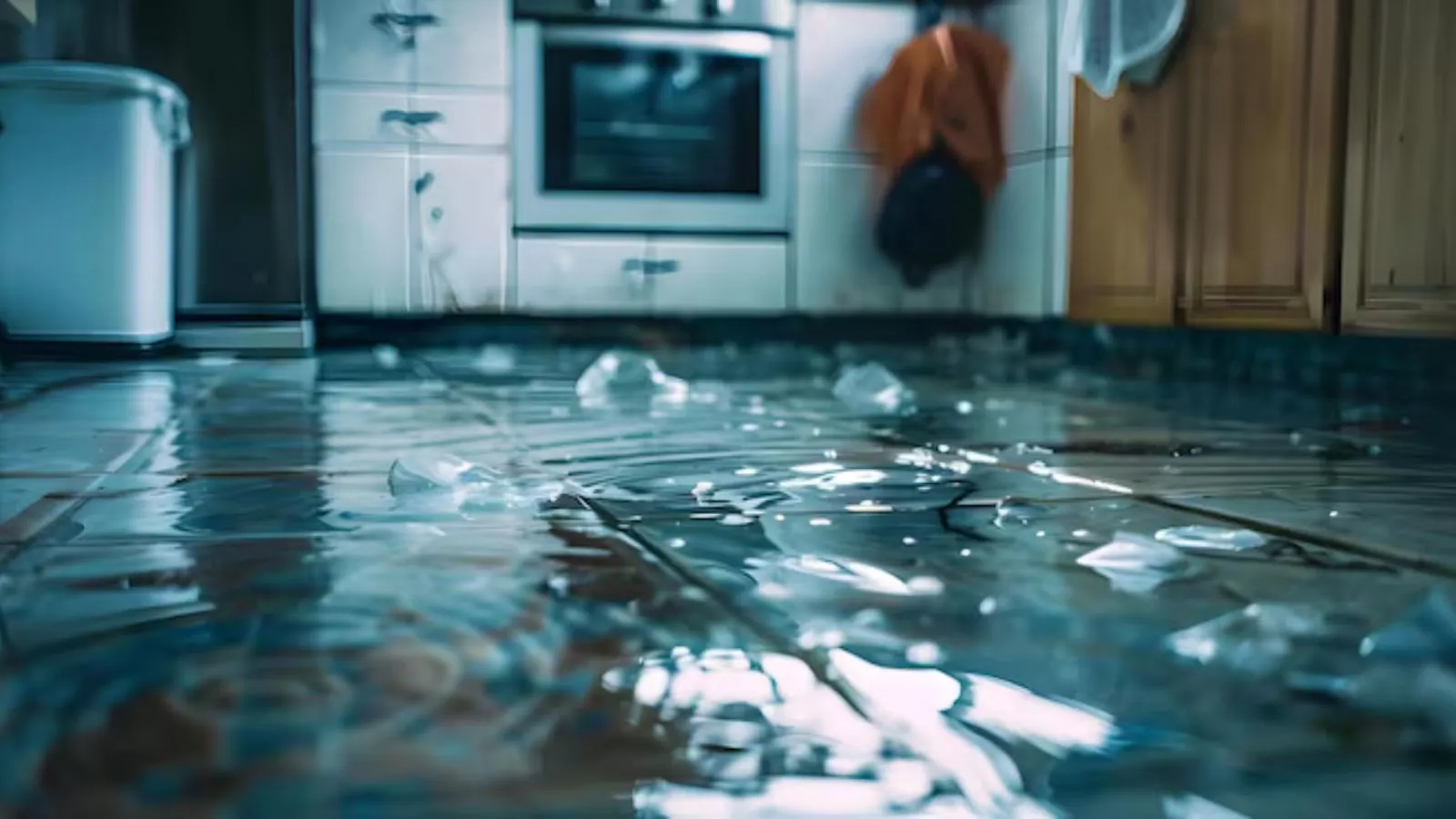
Flood water is an emergency because it spreads fast and is rarely clean. Our dispatch line is open 24/7. Stay out of standing water, turn off power only if the panel is dry and reachable, and call the utility or 911 about any electrical or gas risk before you call us.
Flood damage cleanup in Euclid, OH is the removal of floodwater, silt and contaminated materials, followed by cleaning, disinfecting and drying. Flood water counts as Category 2 or Category 3 water under the ANSI/IICRC S500 standard, so porous materials that soaked it up usually cannot be saved.
When flood water is an emergency
Any water that came from outside, from a creek, from the ground or up through a drain is an emergency. It may carry sewage, fuel, fertilizer and bacteria, and it can energize a basement full of wiring. A few inches of such water is enough to ruin flooring and walls.
Stay out
Keep people and pets out of floodwater and do not wade in to rescue belongings.
Power
Leave the panel alone if it is wet. Call the electric utility or 911 for any electrical or gas risk.
Document
Photograph the water line on the walls before anything moves.
Call
Phone the 24/7 line and describe depth, source and what is floating.
Flood exposure around Euclid
Euclid lies along the southern shore of Lake Erie, and part of the Cleveland Metroparks Euclid Creek Reservation is inside the city. We do not state a flood zone for any street here. The FEMA Flood Map Service Center shows the mapped zone for your address, and the city Building and Housing Department at 585 E. 222nd Street can tell you what local rules apply to repairs.
Flood coverage matters too. Standard homeowners policies usually exclude flood damage, and a separate flood policy is the usual answer. Ask your insurer which water events your policy covers before you need it.
How flood cleanup works
Crews begin with safety. Standing water is pumped out, and mud and silt are shoveled and hauled away. Everything that soaked contaminated water is sorted into what can be cleaned and what must go.
- Carpet, pad, insulation and soft furnishings that sat in flood water are usually discarded.
- Drywall is cut out above the water line when readings show wicking.
- Hard surfaces are cleaned and treated with an antimicrobial product.
- Air movers and dehumidifiers dry what remains, with daily readings.
Water coming from outside or up a drain? Stay out, then call the 24/7 line.
Call (216) 541-8541Flood water categories
| Category | Typical source | Handling |
|---|---|---|
| 1 | Clean supply line | Dry in place when caught quickly |
| 2 | Dishwasher or washing machine discharge | Clean and dry, discard porous items |
| 3 | Flood water, sewage, creek water | Remove porous materials, disinfect, dry |
Flood water is treated as Category 3 until proven otherwise. A pipe leak that sits long enough can drift to a higher category.
When the water came up through a floor drain, read sewage backup cleanup too.
Rain, wind and the damage that follows
Rising water and rain through a damaged roof are different problems. Water that came in through the envelope, such as a roof, a window or a flashing, is covered on the storm water damage cleanup page. If flood water reached the lowest level, basement water damage cleanup covers contents and finished walls.
After the cleanup, structural drying and dehumidification brings framing and subfloor back to a normal range before rebuild.
Scope, price and your claim
Flood cleanup is priced by affected area, depth, how long the water sat and how many materials need removal. We explain the scope and the price before work begins. Never accept a number from a company that has not seen the water line.
Keep receipts for emergency measures and photograph each room. Claims are decided by your insurer, so ask them how to submit documentation.
Questions we hear in Euclid
Yes. Dispatch is open 24/7. Storm flooding often hits at night, and same-day response is offered when a crew is available. Tell the dispatcher what the water is touching.
Treat it as contaminated. Flood water mixes with soil, drain water and chemicals on the way in, so crews classify it as Category 3 under the S500 standard.
Hard, non-porous items and solid wood framing can usually be cleaned. Carpet pad, insulation and soft furniture that soaked flood water usually cannot.
Flood damage is usually excluded from a standard homeowners policy, and separate flood coverage is the usual route. Check your policy or ask your insurer.
Within hours if possible. Flood water carries contaminants, and wet materials start to degrade quickly. Safety comes first, then cleanup.