
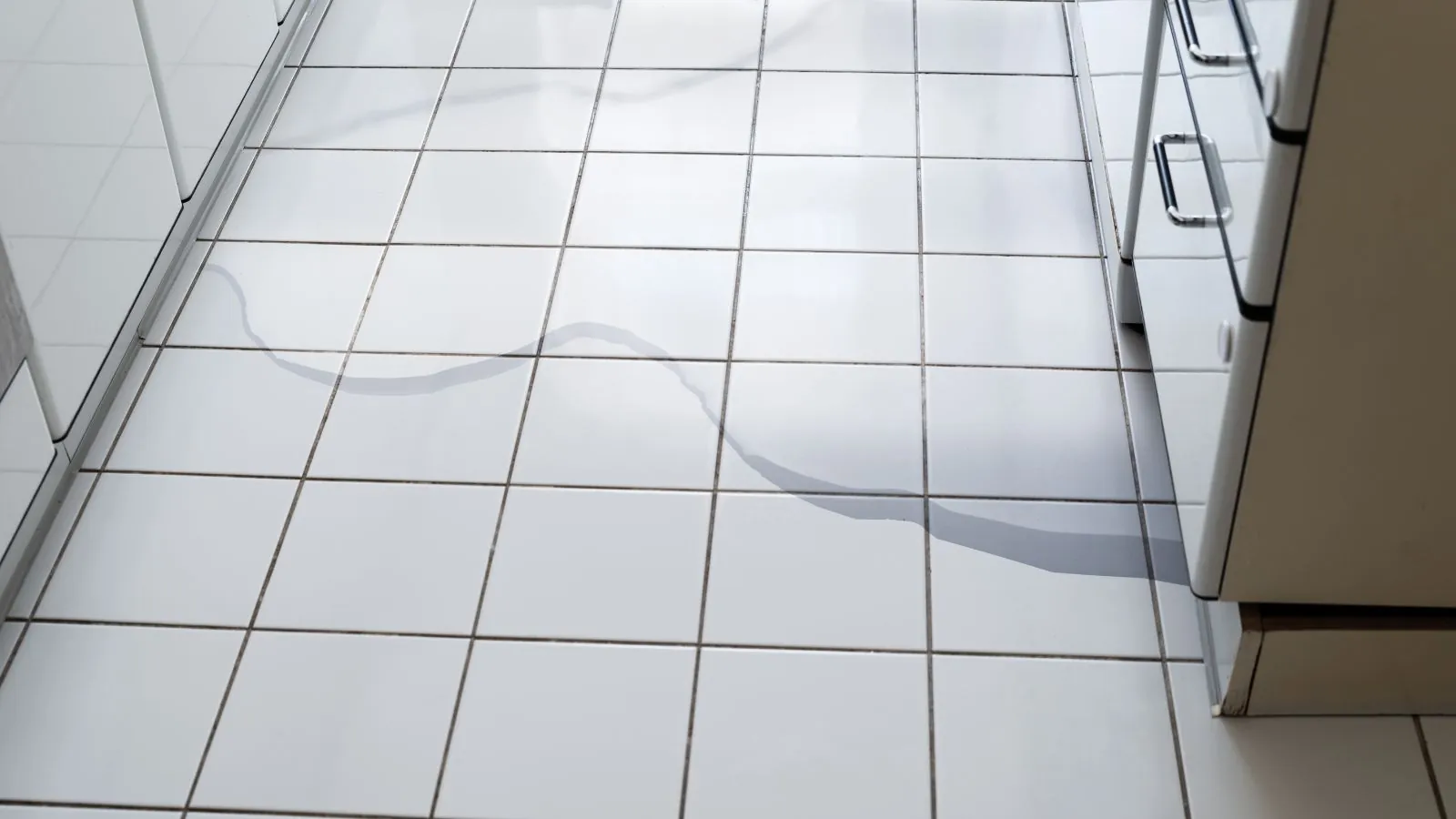
An appliance that leaks while nobody is home can soak a floor in an hour. The dispatch line is open 24/7. Unplug the appliance if the outlet is dry, close its supply valve and stop the water before you start mopping.
Appliance leak water damage in Euclid, OH is what is left after a hose, valve, pump or drain line fails on a dishwasher, washing machine, refrigerator, ice maker or similar fixture. The water is usually clean at first, which makes quick action worth a lot, because clean water can often be dried in place.
Stop the appliance first
Different appliances leak in different ways, but the first moves are the same. Take the power off, shut the water to the unit and keep the water out of outlets and cords.
- Washing machine: close both supply valves behind it and unplug it.
- Dishwasher: shut the supply valve under the sink and cut the breaker if the outlet is wet.
- Refrigerator or ice maker: close the small supply valve on the line behind it.
- Any appliance: do not pull a heavy unit across wet flooring.
The usual culprits
Rubber washer hoses stiffen, crack and let go at the connection. Dishwashers leak at door gaskets, pumps and supply fittings. Refrigerator and ice maker lines are thin tubes, often hidden behind the unit, and they can leak slowly for weeks before the floor shows it.
A leak behind the fridge or under the dishwasher can soak the subfloor and the cabinet base before anyone sees a puddle. If a sink-side cabinet is involved, kitchen water damage restoration explains what happens to cabinets and toe kicks.
What the water reaches
Water from a laundry room or kitchen runs under flooring, into baseboards and down through the subfloor into the room or basement below. A ceiling stain below a laundry room is a common first sign.
Vinyl and tile can hide wet subfloor. Laminate and hardwood swell. Carpet holds water in the pad. For flooring specifics see hardwood floor water damage repair and carpet water damage restoration.
Appliance still running or the floor wet? Close the valve and call.
Call (216) 541-8541How the cleanup works
The crew extracts water, checks the floor, the wall base and the cabinet toe kicks with a meter and finds where the water went. Appliances are pulled out only when it is safe. Small holes can be drilled in toe kicks to push dry air in.
Air movers and a dehumidifier then dry the space. A gradual leak that has run for weeks is a different story, because mold may already be present, and mold remediation covers that second step.
Leak size and likely work
| Leak | Typical result | Typical work |
|---|---|---|
| Short spill, caught fast | Wet surface, dry subfloor | Extract, spot dry |
| Hose failure, an hour or two | Wet floor and baseboard | Extract, dry, monitor |
| Slow leak behind appliance | Swollen cabinet base, soft subfloor | Open, dry, repair |
| Overnight failure | Water in rooms below | Full extraction and structural drying |
Photos and parts for your claim
Keep the failed hose or part in a bag. Photograph the appliance label, the supply connection and the wet floor. An insurer or an adjuster may ask to see the part to judge whether the failure was sudden.
Standards we follow
ANSI/IICRC S500 is the published standard for water damage restoration, and it is why we sort appliance leaks by water category before choosing what to dry and what to remove.
Cost, claims and prevention
Cost follows the area, the flooring, the days of drying and any repairs after. We explain scope and price before work begins. A sudden appliance failure is often covered by a homeowners policy, while a slow, long-running drip often is not, so ask your insurer.
Replace old rubber supply hoses with braided lines, check connections twice a year and know where each shutoff is.
Questions we hear in Euclid
Yes. Dispatch is open 24/7, and a crew is sent the same day when one is available. A washer that fails at night is common, and the line is staffed for it.
Usually at first, which counts as Category 1. If it sits for a day or more, or passes through dirty areas, it is treated as a higher category.
Only if it is light and the floor is dry. Heavy units on wet flooring are a hazard. A crew can move it when needed.
Often for sudden failure, less so for slow leaks. Read the water damage section of your policy or ask your insurer.
Not always. A replaced hose or valve may be all that is needed. Ask a repair technician, and ask your insurer before discarding anything.