
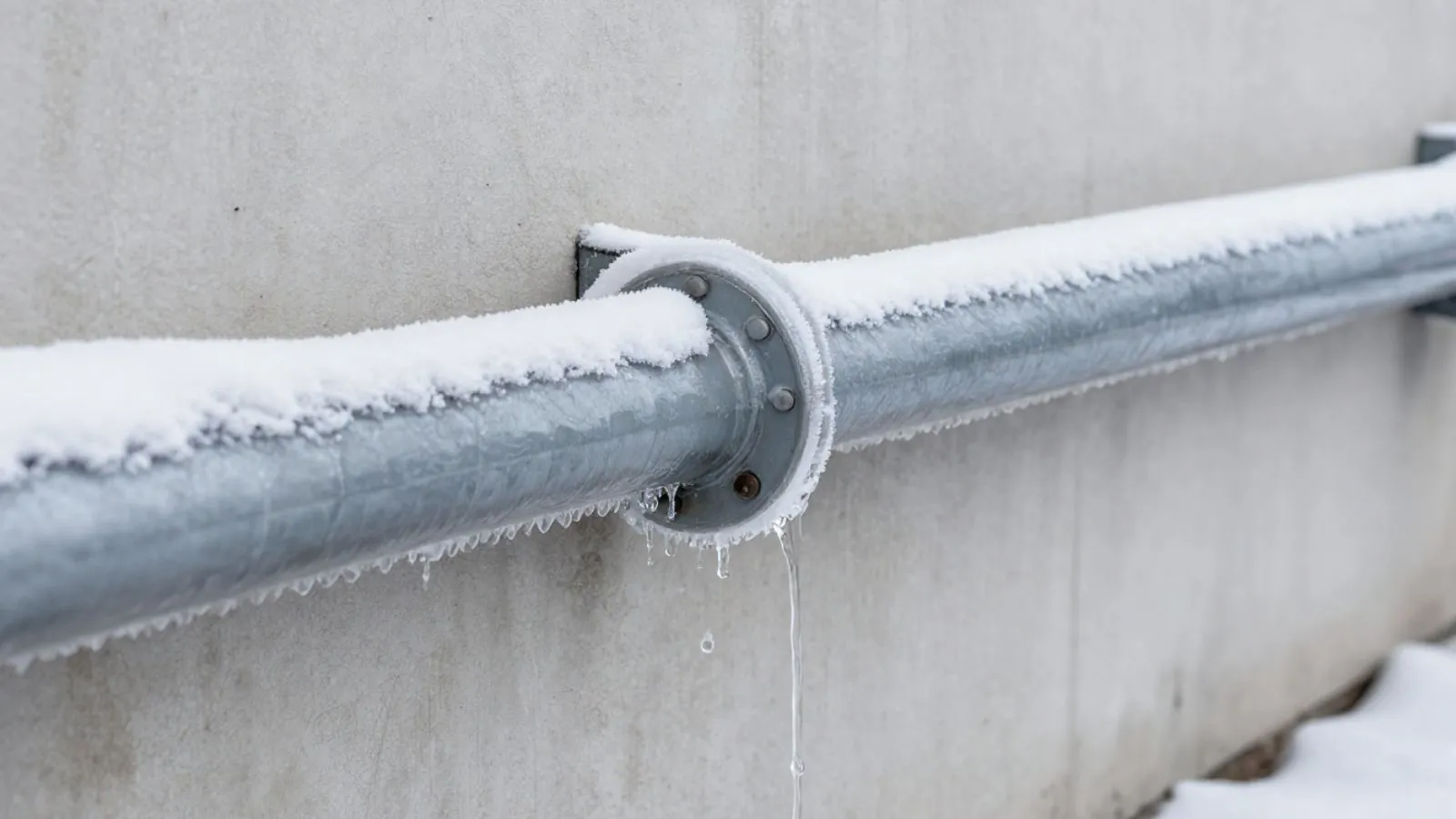
A frozen pipe becomes an emergency the moment it thaws and starts to leak. Our line is open 24/7, including the cold nights when lines freeze. If you suspect a freeze, shut off the main water valve first, then open the faucets served by the frozen line so melting water has somewhere to go.
Frozen pipe water damage in Euclid, OH is the water that escapes after ice splits a pipe or a fitting. The crack often shows up only when the ice melts, so the leak can begin hours after the cold snap ends, inside a wall nobody is looking at.
When a frozen pipe is an emergency
A pipe that is frozen but not leaking is a prevention problem. A pipe that is frozen and bulging, frosted on the outside with a faucet that only drips, or sitting in a wall with a wet stain nearby is an emergency, because thawing can release a full line of pressurized water at once.
- Close the main shutoff before the pipe thaws.
- Open the nearest faucet, and leave it open so thawing water drains.
- Do not use a torch or open flame. Warm air from a hair dryer or a space heater placed safely away from combustibles is safer.
- Check ceilings below the frozen line for stains or sagging.
- Call the 24/7 line the moment you see water, and tell the dispatcher where the frozen run is.
Why Euclid winters are hard on plumbing
Euclid is part of the Lake Erie Snowbelt, where lake-effect snow squalls arrive most often before the lake freezes. Cold snaps do not need a record low to split a pipe. A line in an exterior wall, an unheated garage, an attic or a crawl space only has to stay below freezing long enough for ice to form.
Spots to check each fall include hose bibs, laundry supply lines on outside walls and any run that crosses an uninsulated rim joist. The city Building and Housing Department can say which permits apply if a repair opens a wall.
What frozen pipe damage looks like
The first sign is often low water pressure or a faucet that does not run. After the thaw, signs include a damp spot on a wall or ceiling, paint that bubbles, a musty smell, the sound of running water that nobody is using and a water meter that keeps moving when every fixture is off.
Water from a split pipe runs inside the cavity before it shows outside. A stain the size of a dinner plate can hide a wet wall several feet tall, so the stain alone is never a measure of the damage.
Pipe thawing into a wall or ceiling? Shut off the main valve and call now.
Call (216) 541-8541How the damage is handled
The plumber repairs or replaces the split section. The restoration crew works on the water. Moisture meters and a thermal camera trace wet drywall, insulation and subfloor. Standing water is extracted, then air movers and dehumidifiers dry what can be saved.
Wet insulation is removed because it holds water against framing. Drywall is cut out only as far as the readings require. The details of drying are covered under structural drying and dehumidification, and a pipe that burst from pressure rather than ice follows the steps on the burst pipe page.
Frozen, split or burst: which is it?
| Situation | What is happening | What to do first |
|---|---|---|
| Frozen, no leak | Ice is blocking the line | Shut off the main, open a faucet, warm the area safely |
| Frozen and bulging | Pressure is building behind ice | Shut off the main and call a plumber before it thaws |
| Split and thawing | Water is escaping into a wall or floor | Shut off the main, call the restoration line |
| Burst under pressure | Water flows freely | Main valve, lowest faucet, then call the 24/7 line |
If the leak reached a ceiling, ceiling water damage repair explains what is saved and what is replaced.
Standards we follow
Thaw leaks start as clean water, which ANSI/IICRC S500 calls category 1. The standard still expects us to check how far the water traveled and how long it stayed before choosing a drying plan.
What the loss costs and what insurance may cover
The number of wet rooms, the amount of insulation and drywall removed and the days of drying equipment drive the cost. We walk you through the scope and the price before work begins, and we do not guess over the phone.
Policies often treat a sudden freeze-and-burst differently from a slow leak. Ask your insurer what yours says, and take dated photos of the pipe, the wet area and the shutoff.
Questions we hear in Euclid
Yes. Dispatch is answered 24/7. Many freeze losses start overnight and are found in the morning, so crews are routed after hours and on weekends, and same-day response is offered when a crew is available.
No. Many freeze without splitting, and ice can sit in a pipe for days. The danger is the thaw, so shut off the water and watch the area closely while it melts.
A torch is dangerous inside walls and near insulation. Slow warm air is the safer choice, and a plumber is the better call if the pipe is in a wall or under a slab.
Look for a damp feel, bubbling paint and a musty smell, then check with a moisture meter. A crew will map the wall before deciding whether drywall must be opened.
Insulate exposed lines, seal drafts around pipe penetrations and keep cabinet doors open on cold nights. Disconnect hoses from outdoor spigots before the first hard freeze.