
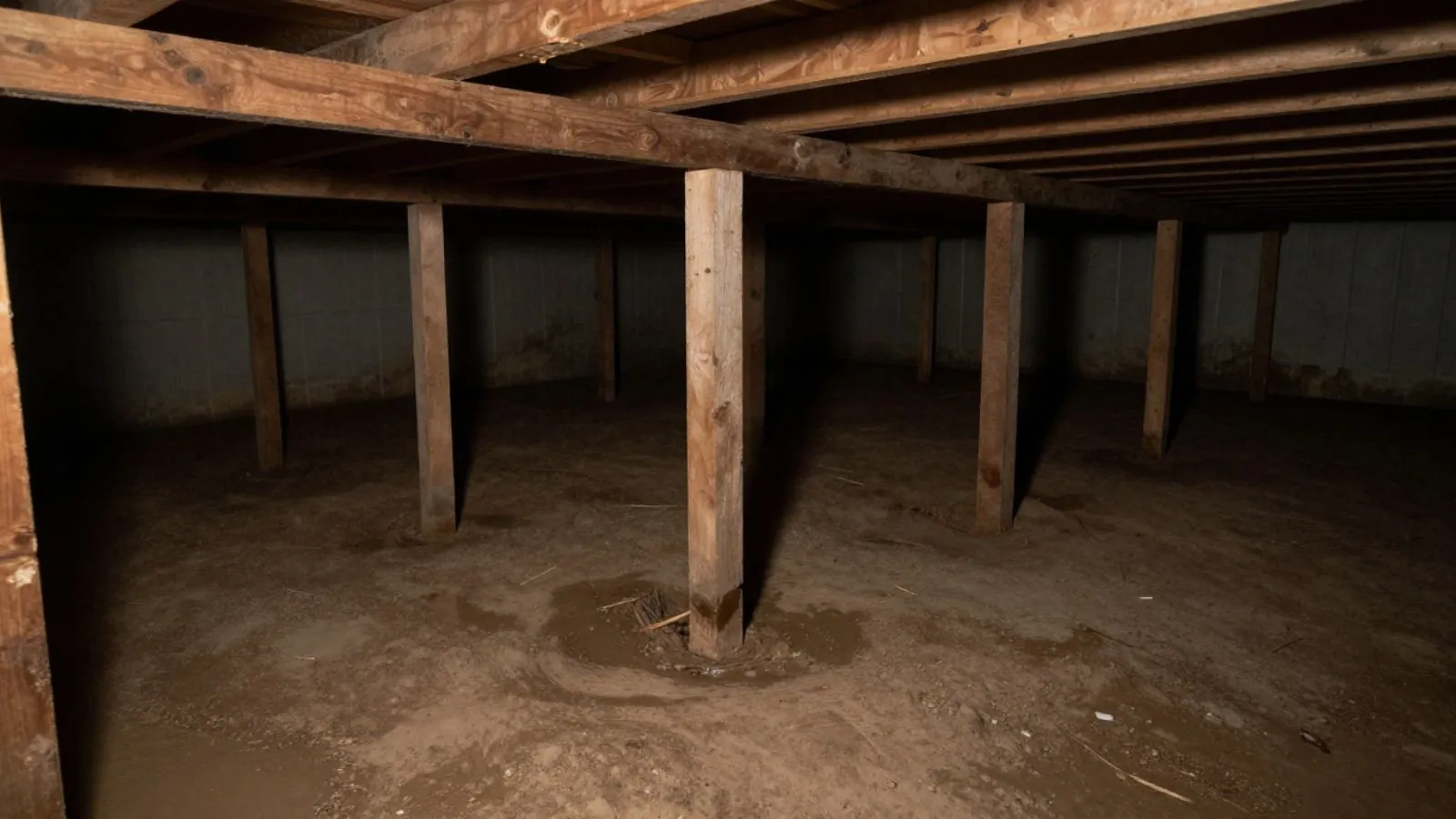
A crawl space is the shallow void between the ground and the first floor, and it collects water quietly. Nobody sees it until the floor above feels soft or the house smells damp. Our line is open 24/7 for active water, such as a leaking line under the floor.
Crawl space water damage cleanup in Euclid, OH covers standing water, wet insulation, damp joists and subfloor and the moisture that lingers in the air. Some Euclid homes have crawl spaces and many have full basements, so this page applies only if yours has an under-floor void.
What happens in a wet crawl space
Water enters from outside through foundation walls or from inside through a failed supply or drain line. Once there, it soaks the soil, the insulation and the wood framing. High humidity can cause the same problems without any liquid water at all.
Wood framing that stays damp can stain, soften and grow mold. That is why drying matters even after the visible water is gone.
Warning signs from inside the house
- A musty smell that is strongest near floor vents.
- Floors that feel soft, bouncy or cold.
- Doors that stick after rain.
- Condensation on ducts or pipes if you can see them.
- A higher indoor humidity reading than usual.
Safety before anyone goes in
A crawl space can contain wiring, nails, insects and sewage. Wet soil can hide holes and sharp debris. Anyone who enters should wear protective clothing and a respirator, and nobody should crawl in after a sewage release without proper gear.
If water in the space came from a drain line or backup, treat it as contaminated and read sewage backup cleanup before opening the access hatch.
Water under the floor or a smell you cannot trace? Call and we will talk it through.
Call (216) 541-8541How a crew handles it
The crew inspects with a flashlight, a moisture meter and a thermal camera, then removes standing water with a small pump and wand tools. Wet insulation is pulled down because it holds water against the joists. Plastic vapor barrier is checked and moved if it trapped water.
Dehumidifiers and air movers are placed so air can move through the space. Readings on the joists and subfloor guide how long the equipment stays. This is the same method described on structural drying and dehumidification, scaled for tight spaces.
Moisture sources and responses
| Source | What to do | Who helps |
|---|---|---|
| Plumbing leak | Fix the line, then dry | Plumber, then restoration |
| Groundwater seepage | Dry, then improve drainage | Restoration, then a drainage or foundation specialist |
| High humidity only | Dry, then control moisture | Restoration, HVAC or moisture control trade |
| Sewage release | Remove contaminated materials | Restoration crew with sewage protocol |
Restoration is not a waterproofing system. If water returns after drying, the entry point has to be fixed.
Vapor barrier, insulation and ventilation
A plastic vapor barrier over the soil can trap water if it holds a puddle against the ground. Insulation between the joists can sag when it is wet. Vents open to outside air can bring humid air in during summer. Each piece of the system affects how fast the space dries.
Changes to the design of the space are the job of a contractor who specializes in crawl spaces. We dry and remove damaged materials, and we are straightforward about what drying cannot fix.
Standards we follow
ANSI/IICRC S500 covers drying in confined spaces too. We grade the water, check the readings in joists and subfloor and explain what the standard means for the insulation and vapor barrier.
Cost and claims
Crawl space jobs are priced by the area, the insulation involved, access and the drying days. Scope and price are explained before work starts. Coverage varies, and groundwater seepage is often treated differently from a sudden plumbing failure, so ask your insurer how yours reads.
Take photos of the water, the insulation and the access, and keep any parts removed from the space.
Questions we hear in Euclid
Active water from a leaking pipe is urgent. A damp space with no visible water can be scheduled. The dispatch line is open 24/7 for both.
Some do. Many have full basements. If your home has an access hatch under a floor, this page applies.
Usually not. Wet fiberglass holds water against framing, and it is usually removed and replaced.
No. Drying removes the water that is there. A leak or seepage source has to be fixed separately.
No, and you should not if water or sewage is present. A crew can enter with protective gear, take readings and tell you what they found, with photos.